
Town of Montgomery Resident Lookup Records
Different Town of Montgomery records establish different facts. The tax roll, BAS search, county GIS, and Image Mate can connect a named owner of record to a parcel, but that is not proof that the owner lives there now. A deed makes a stronger statement about a recorded interest because it identifies grantor or grantee, recording information, and a legal description. A court index, vital-record request, voter response, or license result should likewise be described only for the limited fact it supports. Use the narrowest source first, then add an independent record before treating a match as reliable.
| Record | What It Can Confirm | Custodian or Tool | Access Route |
|---|---|---|---|
| Assessment or tax record | Assessed owner and parcel link | Town roll, BAS, Image Mate | Public search or roll |
| Parcel map | Parcel boundary, ID, and map relation | Orange County GIS | Free web viewer |
| Recorded deed | Recorded interest and transfer trail | SearchIQS or County Record Room | Online tiers or office route |
| Civil case index | Available case-index or calendar lead | WebCivil Local and clerk | Public index, clerk confirmation |
| Vital event | Lawful certificate or genealogy result | Town, village, or NYS DOH | Eligibility rules apply |
| Voter response | Registration or polling response | NYS Voter Lookup and Orange BOE | Exact required inputs |
| License record | Regulated credential details | NYSED or NY Department of State | Public agency search |
For a parcel-related question, begin with the map or tax record. For a past household question, historical directories and newspapers can supply a dated clue. When the question is about a recorded transfer, skip directly to the County Clerk path. That sequence avoids treating one record category as a general resident list.
Note: Save the source date, the role shown, and the exact spelling before comparing any second record.
Town of Montgomery Resident Place Context
Normalize a Town of Montgomery name before searching. Record a middle initial, suffix, former surname, spelling variant, and the Town, village, or ZIP connection. Montgomery village, Walden, Maybrook, and nearby postal areas have separate local contexts, so a postal city by itself is a weak location match. A same-name result should pause the search rather than close it. Compare the time period, parcel identifier, party role, and any relationship or address clue that the official source actually displays.
Historical directories, newspaper notices, and obituary indexes can be useful at this stage. The Orange County Genealogical Society, Thrall Library, Goshen Local History Room, Walden resources, and Hudson River Valley Heritage provide dated research routes. They are historical clues, not current-residence proof. Preserve the page or image reference and source spelling, then test it against the next official record rather than silently changing an old place name to a modern one.
Town of Montgomery Resident Parcel Check
Use a parcel source only when there is a real connection to property. The Town’s BAS search accepts owner name, property address, tax map number, or bill number. Orange County GIS can search owner, address, or parcel ID and permits partial text, selected municipalities, parcel details, and a link to Image Mate. The assessed owner or tax-bill addressee may receive notices somewhere else. The physical parcel location is the situs address, and it should not be confused with a mailing address.
An owner-to-parcel result is the first rung of the evidence ladder. Follow it by matching the parcel ID and legal description to a recorded deed. SearchIQS offers a land-index route, while the Orange County Record Room supplies public computers and copy procedures when an online account does not provide the needed record. The deed’s grantor or grantee role, recording date, document number or book and page, and legal description are the items that turn a property lead into a recorded-interest check.
The broader Town of Montgomery By Street directory explains the address-keyed route when the question is about a road or parcel pattern rather than one named person.
Use Town of Montgomery Resident Court Indexes
WebCivil Local is useful only when a case hypothesis already exists. Its public form can search by index number, party, attorney, judge, party role, court, case type, filing year, status, and future appearances. It also offers HTML or PDF output. The available screen does not make every case file public, and the research capture did not obtain a live docket result. Do not invent a result field, hearing date, charge, or disposition that was not returned by the court.
WebCivil Local’s party-search screen shows the available filters for a New York civil-index query.
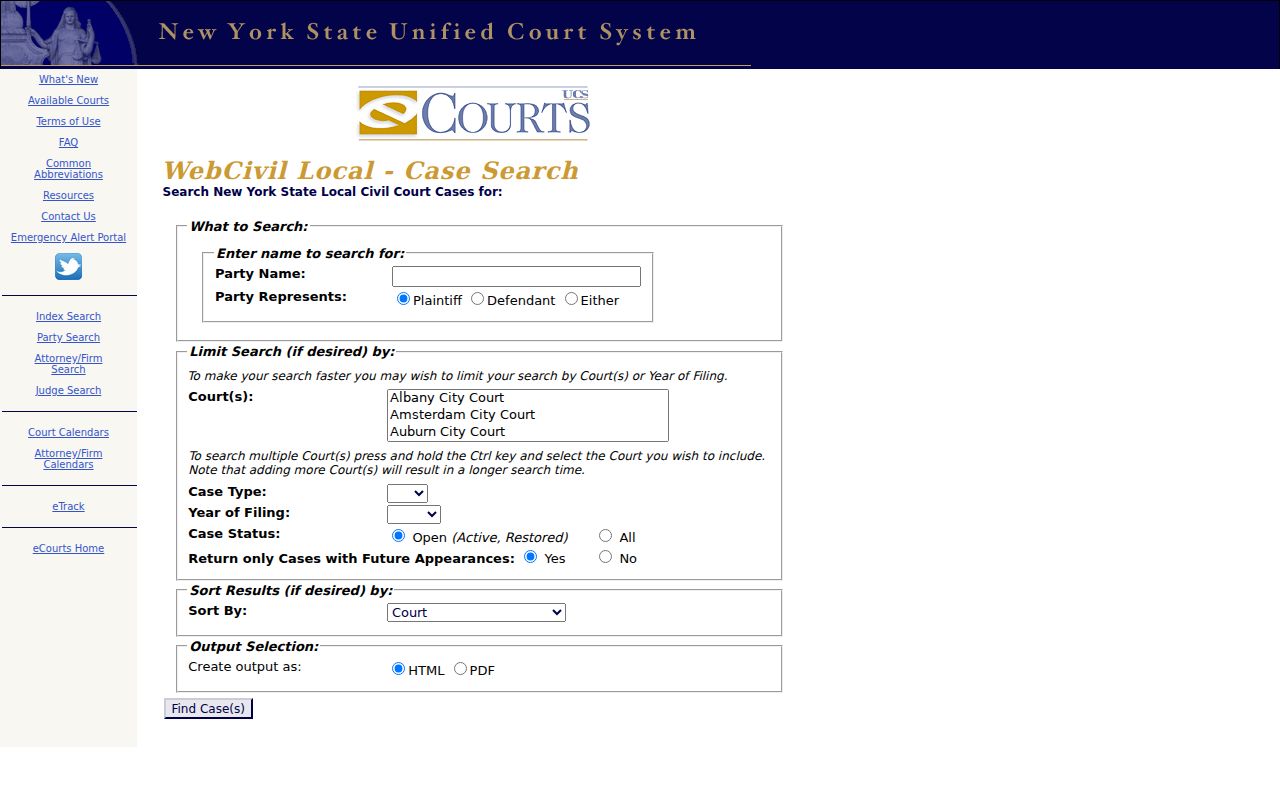
A party hit may identify a plaintiff, defendant, attorney, petitioner, respondent, or another role. Record the role, court, index or case number, filing year, and status. Sealed matters, youthful-offender material, adoptions, and other restricted categories are excluded. If a court record matters, contact the proper clerk to confirm what can be inspected and whether a certified disposition is available.
| Visible WebCivil Local item | How to read it |
|---|---|
| Index type, number, year, and court code | Identifies the indexed case reference when known. |
| Party and role | Shows why a name may appear, not a conclusion about the person. |
| Court, case type, year, and status | Helps narrow the query; index status is not a disposition. |
| Future appearances and HTML/PDF output | Query controls, not a promise that a docket is complete. |
Town of Montgomery Resident Vital Checks
Vital registration has a separate route from ordinary public-record requests. Town birth and death records are not open to public inspection. First identify whether the event belongs with the Town Clerk, a village registrar, or the New York State Department of Health. For genealogy copies, New York uses thresholds of 75 years for a birth when the person is known deceased, 50 years for a death, and 50 years for a marriage when both spouses are known deceased. Direct-line descendants may have a separate proof-based path. A genealogy copy is not a certified identity document.
The state voter tool is also narrow. It requires County, Last Name, First Name, Date of Birth, and ZIP Code, with Orange selected for a Town of Montgomery search. Use it for a registered-voter status or polling hypothesis, not to assemble a household. Election data requests have an elections-purpose restriction, and confidential voter registration can shield protected information. Orange County Board of Elections is the correction and local access route when a voter record needs attention.
Town of Montgomery Resident Specialized Checks
State systems can help distinguish two people with the same name, but each one has its own limited purpose. NYSED professional verification can search a profession with a last name or license number. The New York Department of State license search allows name, license type, county, city, and ZIP filters. A displayed location can be a professional or service address, not a home. Entity filings and license records therefore provide an independent identity detail, not a claim of residence.
The NY DOCCS incarcerated-individual lookup uses a complete name and date of birth when a DIN is unknown, and a DIN is the stronger key. Youthful incarcerated people are not listed. Absence from this system does not establish anything about another court or custody record.
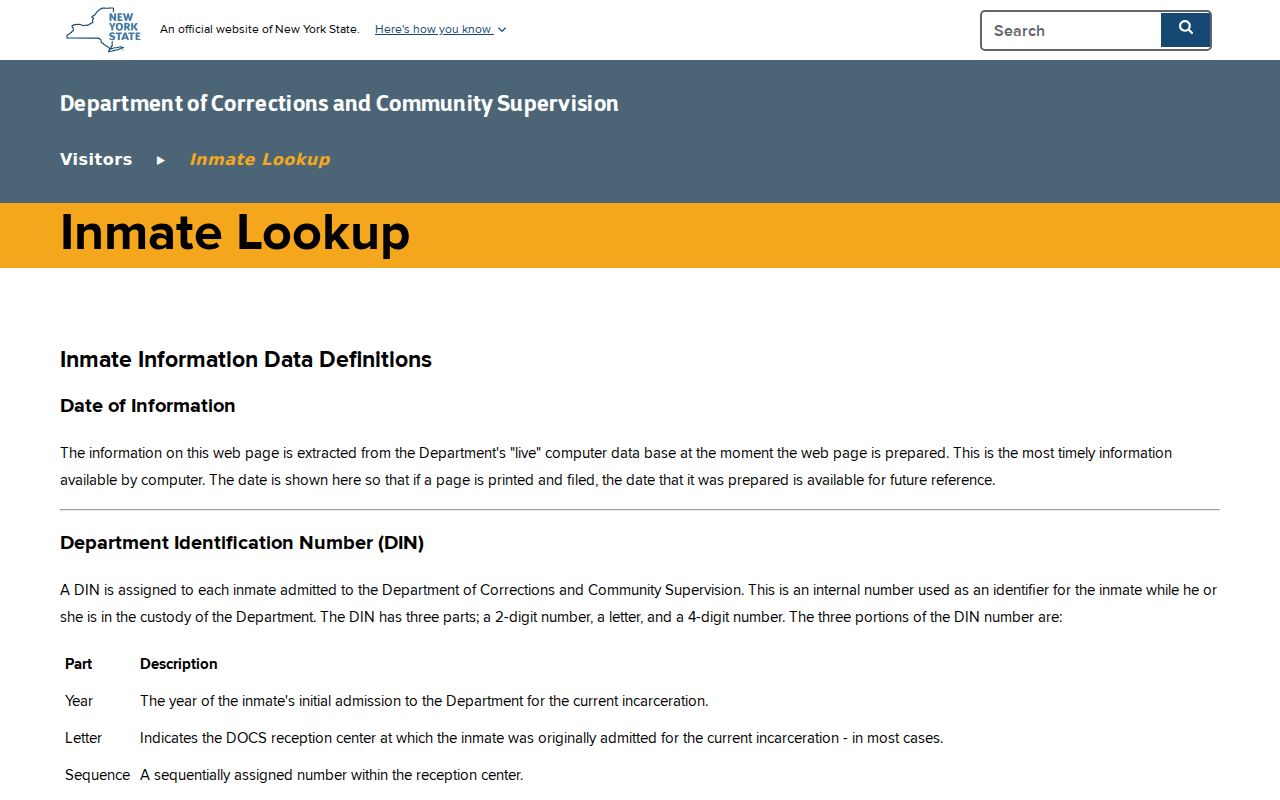
The DOCCS screen belongs to a statewide custody system, not to a Town of Montgomery resident directory. Use its official instructions and the access date, and avoid character claims based on a search result or an absence of one.
The NY DCJS registry search has separate last-name, county, and ZIP modes, plus custody-exclusion choices and a CAPTCHA. Its public online scope is limited to Level 2 and Level 3 registrants.
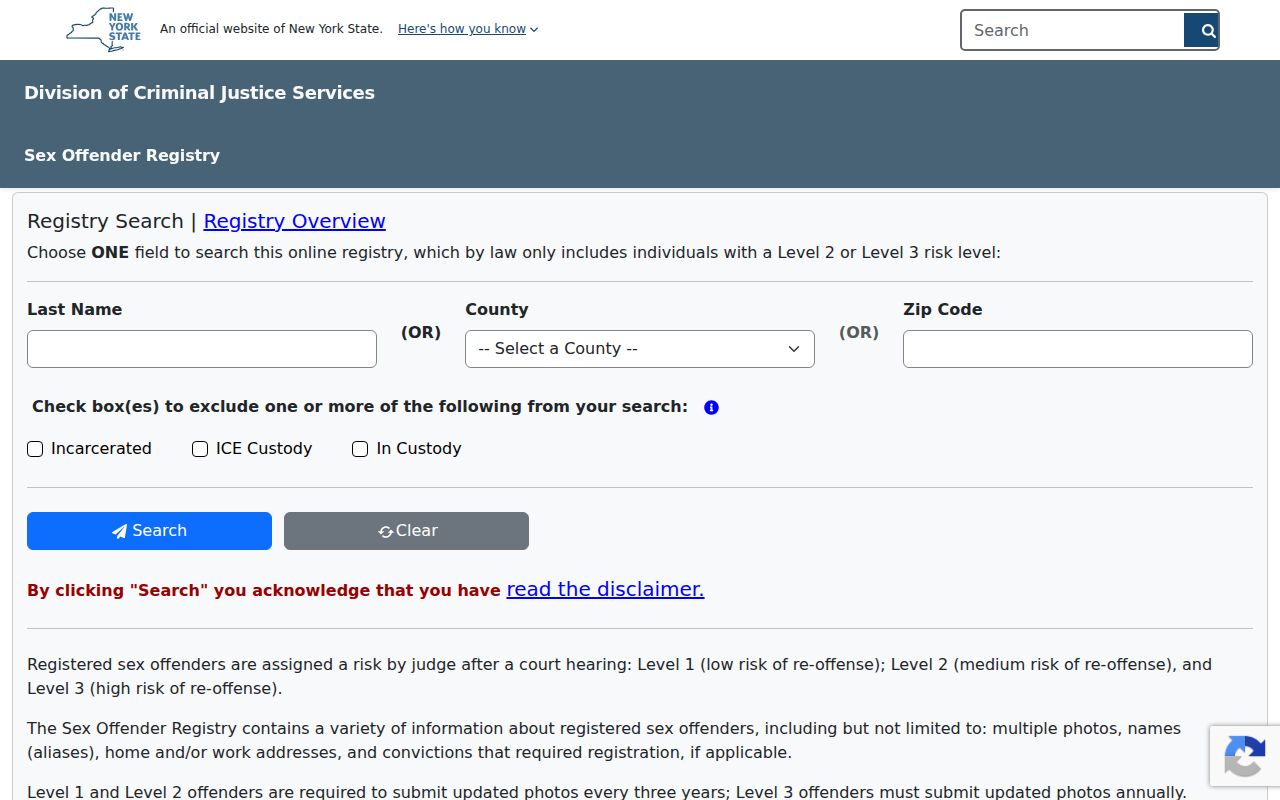
That registry is a specialized legal-status resource with inclusion, custody, and update limits. It is not proof of current residence and should never be converted into a broad local list.
Town of Montgomery Resident Record Trail
A careful search moves from an identity hypothesis to a source-backed conclusion. The aim is modest: identify an assessed owner in a dated roll, a recorded party in a deed, a party in a public case index, or a historical directory entry. Stop before the records support more. If the parcel, middle initial, date, village, or legal description conflicts, retain both possibilities and ask the original custodian for the record that resolves the conflict.
- Write the name variants, Town or village context, ZIP, and approximate period being tested.
- If property is relevant, use GIS or BAS to capture the parcel ID, situs address, owner-of-record label, and source date.
- Search the County Clerk deed route for the named grantor or grantee, then compare the legal description and recording date to the parcel.
- Use WebCivil only for a case lead, and verify a meaningful court hit with the clerk using the case number and party role.
- Choose the vital, voter, license, or historical source that matches the remaining question and record its eligibility or access limit.
- Docket
- A court’s running case record. An online index can point to it, but may not show every filing or a certified outcome.
- Index and image
- An index lists searchable record metadata. An image is the scanned document and may have different access rules or fees.
- Certified copy
- A copy issued by the custodian with its official certification, used when an ordinary online record display is insufficient.
Note: A parcel owner, historical occupant, voter, licensee, and case party can be different people with the same name.
Town of Montgomery Resident Privacy Limits
New York law and custodian rules can remove or restrict information even when a search form is public. The Address Confidentiality Program uses a substitute address for eligible participants, while confidential voter registration is a separate safeguard. Court files can include sealed material and protected addresses. Town records may require redaction when disclosure would be an unwarranted invasion of privacy. Do not try to use a postal ZIP, parcel match, or substitute address to work around a protection.
For an error in an official record, go to the custodian: the Town Assessor for tax data, County Clerk for a recorded document, court clerk for case metadata, Orange County Board of Elections for voter information, NYS DOH or the registrar for vital records, and the licensing agency for a credential. New York’s Freedom of Information Law is Public Officers Law Article 6, but it does not override vital-record confidentiality or court sealing.
Lawful use. Use official records for personal, lawful research. Never use information from a record trail to stalk, harass, intimidate, or harm another person.